Menu

Whether you have a tree on your property or are simply interested in arboriculture, you might be curious about the lifecycle of trees. Specifically, how do trees grow old and die? Sesmas Tree Service has years of experience in this field and is happy to share some information with our friends. If you have specific questions or concerns about a tree on your property, feel free to call Sesmas Tree Service in Atlanta to speak with a certified arborist.
Average Lifespans of Trees
 Your Trusted Local Arborists
Not every tree removal business can handle large-scale site clearing and site preparation projects like Sesmas Tree Service can. We…
Learn More Your Trusted Local Arborists
Property management companies and HOA’s in Georgia are required to maintain their retention ponds to make sure their stormwaters on their properties…
Learn More Your Trusted Local Arborists
 Your Trusted Local Arborists
At Sesmas Tree Service, we understand that the main priorities at your commercial office and industrial sites are to keep…
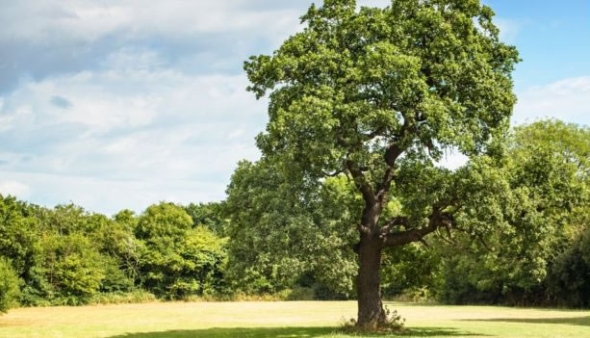
Learn MoreTrees are living organisms just like humans and they too have growth, reproduction, and death. As you know, trees have life spans that vary greatly. For example, fruit trees generally live for between fifteen and fifty years. Olive trees can live for as long as 500 years. Meanwhile, Redwoods and Bristlecone pines can live for thousands of years! So, what determines how long these trees die? How do they grow old and die? This question is actually misleading because trees do not die of old age. In fact, neither do humans. We simply die due to causes associated with aging.
Cause of Death
Dying of old age is not a scientifically accurate term. Nobody dies of old age, per se. Rather, we pass away from common diseases or complications associated with aging such as an organ failure, stroke, or Alzheimers disease. Similarly, trees do not die of old age. Instead, they die due to the accumulation of diseases and stressors such as storms, diseases, pests, insects, soil erosion, weather, and pollution. Technically, a tree can live forever so long as nothing interferes with its ability to perform its life functions that allow it to survive. Alas, the chances are slim to none. Tree Removal In Johns Creek
Threats to A Trees Life
So, if we want our tree to live for as long as possible, we are going to have to eliminate the threats to its survival capabilities. Needless to say, it is impossible to eliminate all of them, but we can work to cure what we cannot prevent. Here are some primary threats to a trees life:
Call the Professionals for Help
If you want a certified arborist to take a look at your tree and inspect its condition, then call the professionals at Sesmas Tree Service. We have been in the industry for over a decade and are committed to helping our community grow strong and healthy trees.
Stay updated with the latest tips, trends, and insights from Sesmas. Explore expert advice on tree care, safety, and maintenance to keep your landscape healthy and beautiful year-round.
View All
Trees are magnificent entities that add beauty and functionality to your home. However, they can pose serious risks if left unattended.…
Read More
Trees are magnificent entities that improve our landscapes and the environment. Whether it’s their profound beauty during spring or the shield…
Read More
Taking care of trees on your property regularly is one of the smartest investments you can make to protect long-term value…
Read More
After cutting down a potentially hazardous tree on your property, the job is not complete until you get rid of the…
Read More